Spring Foraging in April – Learning Through Nettles
Last year, we explored a range of April foraging finds including dandelions, garlic mustard, cleavers, and wild greens. You can revisit that guide for inspiration and seasonal ideas, but this year we’re focusing on one of the most valuable spring plants:
nettles (Urtica dioica)
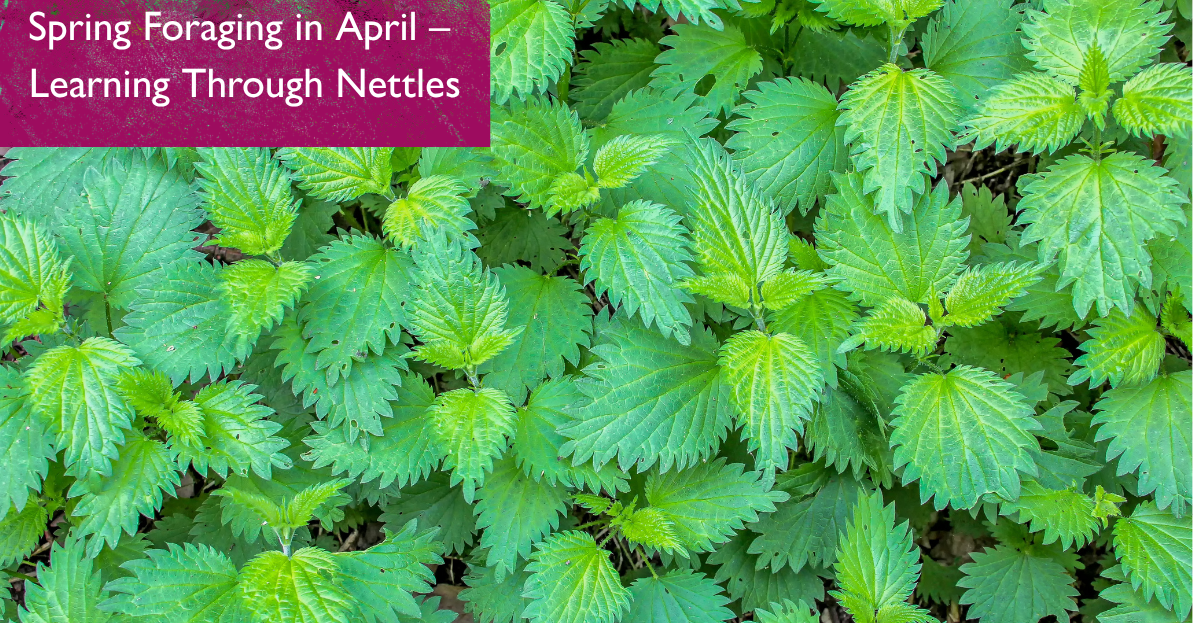
Nettles are at their best in April — tender, abundant, and nutrient-rich. They are also one of the most important plants for learning safe harvesting, regrowth, and sustainable foraging techniques.
Why Nettles Matter in April
April is when nettles are at their best. The young shoots are tender, full of flavour, and particularly rich in nutrients before the plant matures later in spring. They’re also a useful plant to learn from at this time of year. Nettles respond quickly after cutting, making them a good example of regrowth in action. They’re easy to harvest selectively, and if left to grow on, they later provide food and habitat for pollinators when they flower.
Altogether, they’re a strong example of how a common wild plant can offer both food and ecological value through the season.
.png)
Identifying Nettles (Urtica dioica)
Nettles are easy to identify once you know the key features:
- Serrated, heart-shaped leaves
- Opposite leaf pairs on square stems
- Covered in fine stinging hairs
- Common in hedgerows, gardens, and nutrient-rich soil
Wear gloves when picking, and harvest only young tops for best flavour and texture.
.png)
Nutritional Value of Nettles
Nettles are one of the most nutrient-dense wild greens in the UK.
- High in iron (supports energy and blood health)
- Rich in calcium (bone support)
- High in magnesium and potassium (muscle and nerve function)
- Excellent levels of vitamins A, C, and K
- Contains plant protein and antioxidants
to support energy after winter.
.png)
Sustainable Harvesting
To ensure nettles continue to thrive:
- Harvest only the top 2–4 leaves
- Use scissors rather than pulling
- Avoid stripping entire patches
- Leave plenty to grow on for wildlife and regrowth
.png)
Nettle Cooking (Urtica dioica)
Nettles are one of the most versatile wild ingredients you can forage in spring. Once cooked or wilted, they lose their sting and can be used in much the same way as spinach or other leafy greens. From simple soups and teas to more creative bakes and savoury dishes, nettles lend themselves to a wide range of recipes, making them an easy and rewarding addition to seasonal cooking.
.png)
Nettle Recipes
1. Nettle Tea (Mineral Infusion) A simple way to extract nutrients.
Method:
- Use fresh or dried leaves
- Steep in hot water for 10–15 minutes
- Strain and drink
A traditional spring recipe.
Method:
- Sauté onion and garlic in olive oil
- Add chopped potato and vegetable stock
- Simmer until soft
- Add nettles at the end and cook for 2–3 minutes
- Blend until smooth
A wild alternative to basil pesto.
Method:
- Blanch nettles briefly
- Blend with nuts or seeds, olive oil, lemon juice, and garlic
.png)
4. Nettle & Potato Cakes
Method:
- Mix mashed potato with cooked nettles
- Add egg and seasoning
- Fry until golden
Method:
- Finely chop blanched nettles
- Fold into bread or scone dough
Method:
- Wilt nettles in a pan
- Add to beaten eggs
- Cook as an omelette or bake
.png)
7. Nettle Cake
A surprisingly light, sweet way to use nettles.
Method:
- Blanch and finely chop nettles
- Cream butter and sugar, then add eggs
- Fold in flour, baking powder, and nettles
- Bake until golden
Nettles add colour and moisture, similar to spinach cake.
8. Nettle Spanakopita
A wild twist on the classic Greek dish.Method:
- Blanch and chop nettles
- Mix with feta cheese, egg, and herbs
- Layer into filo pastry
- Bake until crisp and golden
A simple, crunchy snack.
Method:
- Wash and dry young nettle leaves thoroughly
- Toss lightly in oil and a pinch of salt
- Bake at a low temperature (around 140–150°C) for 8–10 minutes until crisp
Watch closely to avoid burning.
.png)
Foraging Responsibly
While foraging is a rewarding and educational experience, it’s important to do so responsibly to ensure that plant populations remain healthy for future generations. Here are some key tips for ethical foraging:
Know your plants: Always ensure you can positively identify the plants you're foraging. Some edible plants have poisonous look-alikes, so double-check before harvesting.
Take only what you need : Avoid over-harvesting. Leave enough for the plant to regenerate, and only take what you can use.
Respect the environment: Stick to foraging in areas where it’s permitted, such as public land or areas where foraging is allowed. Never forage in protected or conservation areas.
Leave no trace: Forage without disturbing the area, and clean up after yourself. Leave the environment as you found it to preserve the ecosystem.
Join Now
Become a National Allotment Society member and help to preserve and protect allotments for future generations.
You'll also gain a range of benefits including free liability insurance, initial legal support, expert advice and much more.
Non Member Newsletter Signup

National Society of Allotment & Leisure Gardeners Ltd
Registered in 1930 under the Industrial & Provident Societies Acts no. 11144R
VAT No. 1212930 14
Patron His Majesty King Charles III
© 2022-2023 National Society of Allotment & Leisure Gardeners Ltd