Using Cardboard on Our Allotments
We always say, “If you ask three gardeners for advice, you’ll get four opinions!” We take a balanced view:
plain, non-glossy cardboard is generally safe to use on allotments, but some gardeners prefer not to use it—and that’s fine.
What Cardboard Contains
Cardboard is made from plant fibres, starches, and adhesives. Some potential concerns arise with:Colourful or glossy prints: may include heavy metals or chemical coatings
Waxed or grease-resistant surfaces: sometimes treated with PFAS
Heavily recycled cardboard: may carry traces of chemicals from previous uses
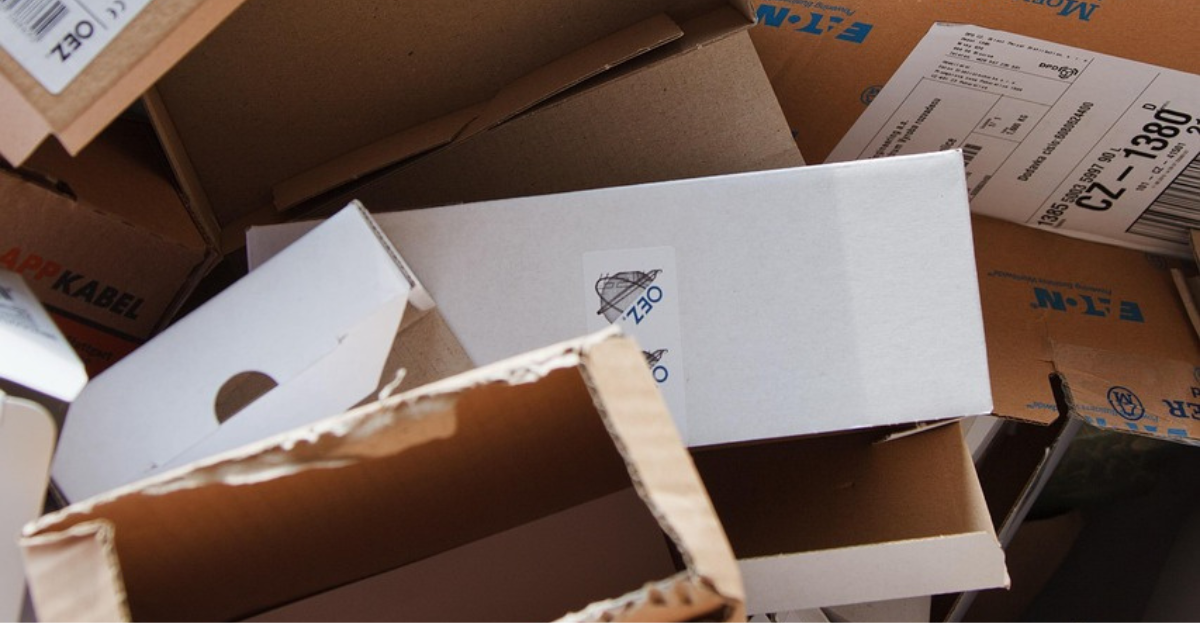
Tape, staples, or labels: may leave metal or adhesive residues in the soil
For plain, brown shipping boxes, these risks are minimal. Still, it’s understandable that some gardeners worry about potential contamination, especially when growing edible crops.
Worries About Cardboard
Here are common concerns:
PFAS (“Forever Chemicals”):
Found in grease-resistant or waxed cardboard, not typical of plain shipping boxes. PFAS can persist in the environment and may accumulate in soil or food chains, but for ordinary brown boxes, the risk is negligible.
Residual chemicals from recycling:
Heavily recycled cardboard can carry traces of pulping chemicals, inks, or adhesives. While generally low-risk, some gardeners prefer to avoid it for sensitive crops.
Heavy metals in inks:
Soy-based inks are usually safe, but glossy, colored inks can contain small amounts of heavy metals.
Plastic, staples, or tape:
Can leave residues in soil or prevent proper decomposition.
Messiness and site management:
Volunteer supervisors often find soggy, windblown cardboard left scattered by careless plot holders. It may look untidy, but it still provides benefits for soil health.
Balanced approach:
These concerns don’t mean cardboard should never be used—they mean we need to choose carefully, stick to plain, untreated cardboard, and secure it properly on our plots.
When to Use Cardboard on Your Allotment
1. As a Weed Barrier
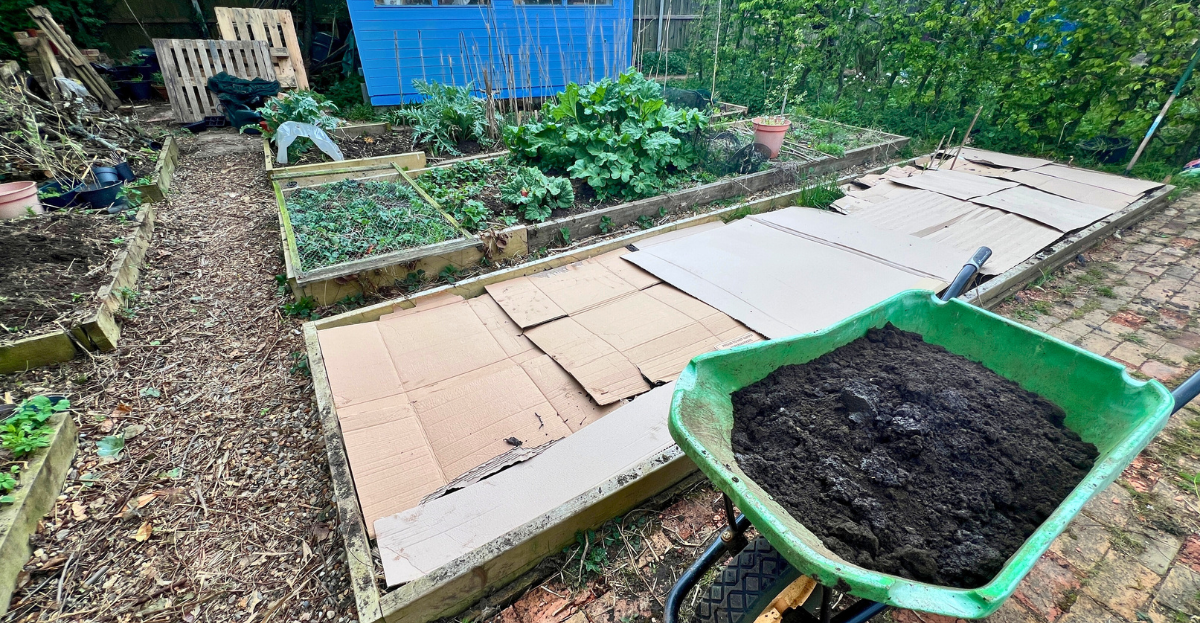
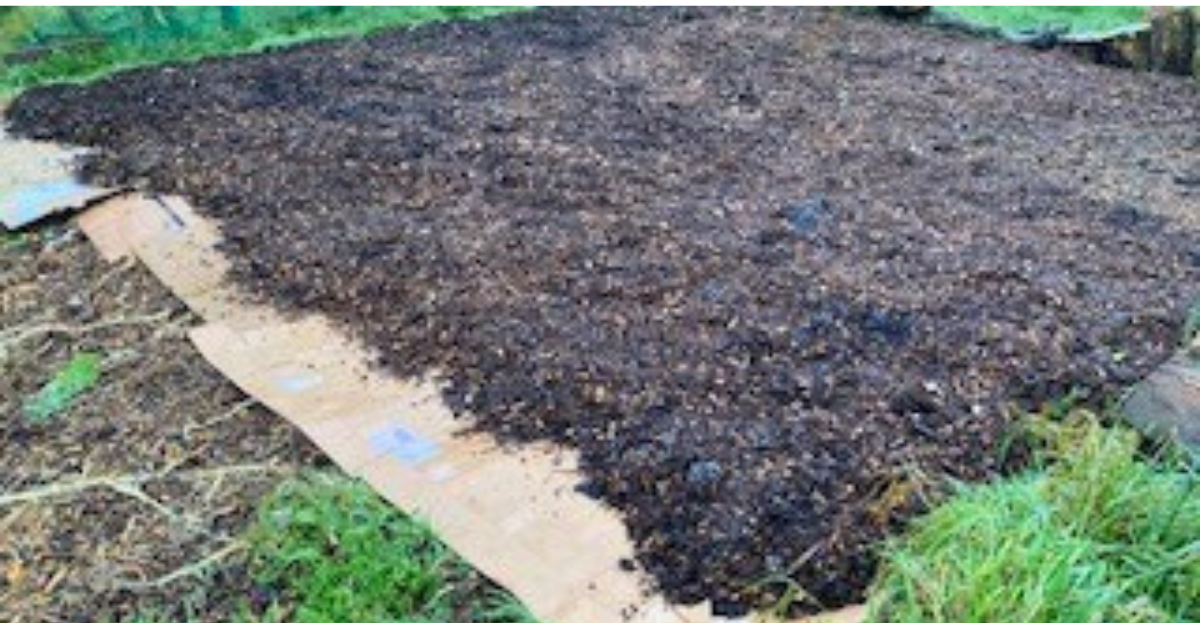
Cardboard is excellent for smothering perennial weeds before planting. Lay sheets over the soil in late winter or early spring to block sunlight. Overlap the sheets to avoid gaps, and wet the cardboard to keep it in place.
Tips:
- Avoid tape, staples, or glue—they can prevent decomposition and leave residues.
- Plain brown cardboard works best; colored or glossy cardboard can introduce unwanted chemicals.
- Secure the sheets properly—unpinned cardboard can blow around, making plots untidy over winter.
Cardboard acts as a biodegradable mulch for new beds, particularly on grass or overgrown soil. It smothers unwanted vegetation while slowly breaking down, enriching the soil underneath.
Worms and ecosystem benefits:
- Encourages worms, which aerate the soil and transfer nutrients.
- Supports microbial life and soil structure.
- Over time, improves fertility—even if the bed doesn’t look neat immediately.
After harvesting, lay cardboard over empty plots in autumn. This prevents weeds from taking over, protects soil from erosion, and helps maintain nutrients. By spring, the cardboard will have begun to decompose, leaving the soil fertile and ready for planting.
4. As Compost or Mulch
Shredded cardboard is an excellent carbon source for compost, balancing nitrogen-rich vegetable scraps. It can also be used as mulch around plants to retain moisture and gradually feed the soil.
Tip:
Stick to plain cardboard, free from plastic tape, staples, or food residues.
Checking for Chemicals
While cardboard is generally safe, a few steps help us avoid potential contaminants:
Oil Test for PFAS:
Drop a little cooking oil on the cardboard. If it beads up, the cardboard likely contains PFAS and should be avoided for edible beds.
Avoid:
Glossy cereal boxes, wax-coated or heavily recycled white cardboard, and boxes with tape or staples.
Safe choice:
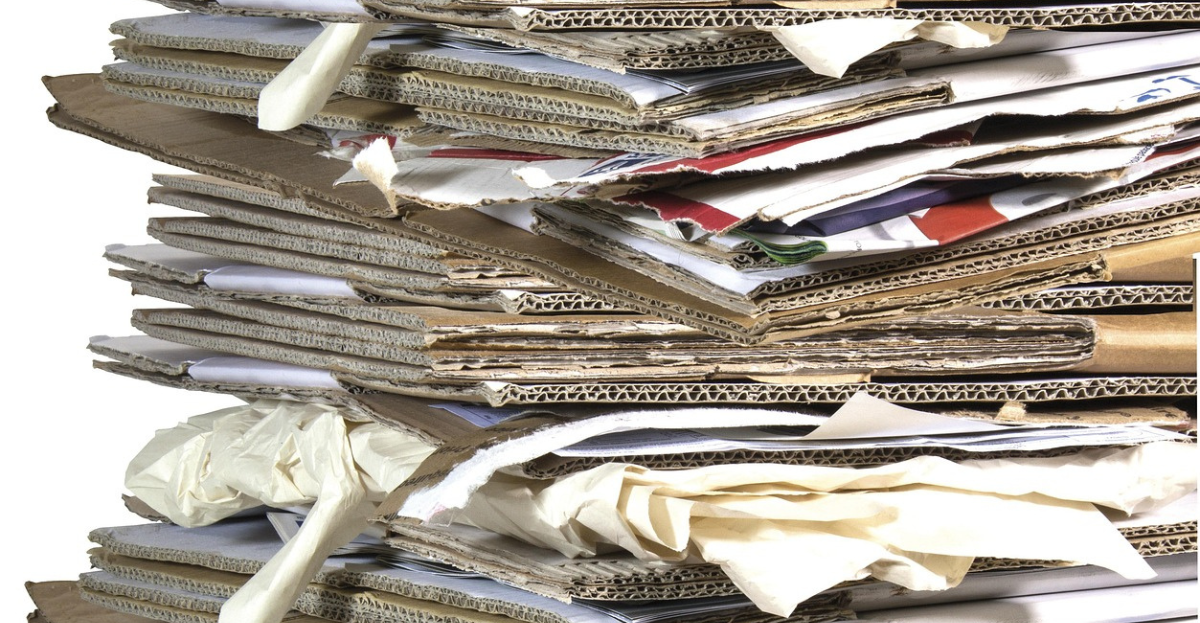
Plain, brown, non-glossy cardboard, such as typical shipping boxes without labels or coatings.
Respecting Each Other’s Approaches
We know that not everyone wants to use cardboard, and that’s perfectly fine. On allotments, respecting each plot holder’s choices is part of the community spirit.
Using cardboard is one tool among many for healthy, productive gardening. Whether we choose to use it or not, the key is balanced, sustainable practices:
protecting our soil, encouraging worms, reducing weeds, and ultimately growing safe, nutritious food.

Conclusion
Using cardboard on your allotment doesn’t have to be complicated. With a little care—choosing plain, untreated cardboard and securing it properly—you can enjoy the benefits of soil, worms, and weed control, while keeping your plot safe and productive.
Remember, every gardener has their own approach, and part of the joy of allotment life is learning from each other, sharing tips, and respecting different methods. Whether you decide to use cardboard or not, the ultimate goal is a healthy, thriving garden that works for you and your community.
Join The National Allotment Society
Become a National Allotment Society member and help to preserve and protect allotments for future generations.
You'll also gain a range of benefits, including free liability insurance, initial legal support, expert advice, and much more.Non Member Newsletter Signup

National Society of Allotment & Leisure Gardeners Ltd
Registered in 1930 under the Industrial & Provident Societies Acts no. 11144R
VAT No. 1212930 14
Patron His Majesty King Charles III
© 2022-2023 National Society of Allotment & Leisure Gardeners Ltd